sight reading for piano pdf
Sight Reading for Piano: A Comprehensive Guide
Embarking on a journey to master piano sight-reading unlocks a world of musical possibilities. Resources like “Sight reading exercises op.45 (1).pdf” and “Level4Complete.pdf”
provide valuable practice material‚ aiding in rapid musical comprehension and performance.
What is Sight Reading?
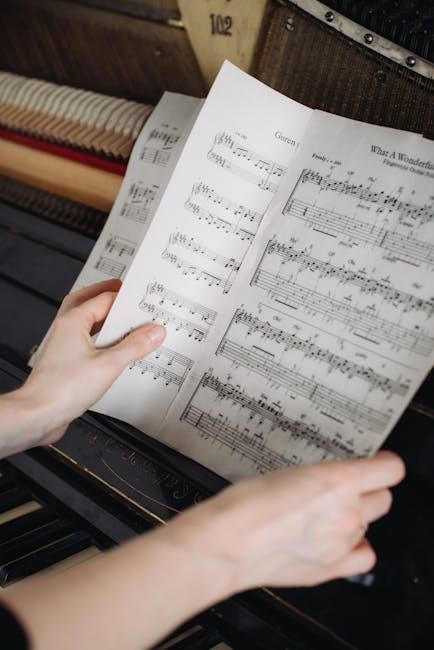
Sight-reading‚ in the context of piano performance‚ is the ability to accurately interpret and play a musical score at first sight – meaning without prior practice. It’s a crucial skill demanding a unique blend of theoretical knowledge and practical application. Essentially‚ it’s about decoding the language of music in real-time.
This isn’t simply about playing the correct notes; it encompasses rhythm‚ dynamics‚ articulation‚ and even a basic understanding of the musical style. Resources like downloadable PDFs‚ such as “Sight reading exercises op.45 (1).pdf” and “Level4Complete.pdf”‚ are specifically designed to hone this skill. These materials present new musical excerpts‚ forcing the pianist to rely on their immediate interpretive abilities.
Successful sight-reading requires efficient pattern recognition‚ a strong grasp of music theory‚ and the ability to translate visual information on the page into coordinated physical movements at the keyboard. It’s a skill that develops with consistent‚ focused practice‚ utilizing materials readily available in PDF format.
Why is Sight Reading Important for Pianists?
For pianists‚ proficient sight-reading transcends mere technical ability; it’s a gateway to musical independence and broader artistic expression. It allows for quicker learning of new repertoire‚ facilitating a more diverse and fulfilling musical journey. Imagine effortlessly tackling new pieces without laborious pre-practice!
Furthermore‚ sight-reading is invaluable for collaborative musicianship. Accompanying vocalists or instrumentalists demands the ability to follow along and adapt quickly to changes. Access to resources like “Sight reading exercises op.45 (1).pdf” and “Level4Complete.pdf” – readily available as PDFs – provides targeted practice for these scenarios.
Beyond performance‚ strong sight-reading skills enhance music theory comprehension and overall musical literacy. It’s a foundational skill that supports all other aspects of piano study‚ fostering a deeper connection with the music itself. Consistent practice with PDF exercises builds confidence and fluency.
Essential Skills for Effective Sight Reading
Effective sight-reading isn’t about playing perfectly on the first attempt‚ but about maintaining a steady tempo and minimizing errors. Core skills include a strong grasp of rhythm‚ note recognition‚ and understanding of key and time signatures. Utilizing resources like downloadable PDFs – such as “Sight reading exercises op.45 (1).pdf” and “Level4Complete.pdf” – is crucial for focused development.
Developing the ability to quickly scan the score‚ identifying patterns and potential challenges‚ is paramount. This pre-reading ‘scan’ prepares your mind and fingers for what’s to come. Consistent practice with varied material‚ found in these PDF collections‚ builds this skill.
Furthermore‚ cultivating a habit of looking ahead – anticipating the next notes and rhythms – prevents stumbling and maintains musical flow. These PDFs offer progressive exercises designed to hone these essential sight-reading competencies‚ fostering accuracy and speed.
Understanding Key Signatures at a Glance
Rapidly recognizing key signatures is fundamental to efficient sight-reading. Instead of consciously calculating sharps or flats‚ aim for instant recognition. Resources like practice PDFs – including “Sight reading exercises op.45 (1).pdf” and “Level4Complete.pdf” – provide ample opportunity to drill this skill.
Associate each key signature with its corresponding scale and common accidentals. Visualizing the scale pattern reinforces this connection. Consistent exposure through varied exercises‚ readily available in these downloadable materials‚ builds automaticity.
Focus on recognizing the feel of each key‚ rather than solely relying on counting sharps or flats. This intuitive understanding allows for smoother transitions and more confident sight-reading. The progressive nature of these PDFs ensures gradual mastery of key signature recognition.
Recognizing Time Signatures and Rhythmic Patterns
Decoding rhythmic patterns swiftly is crucial for successful sight-reading. Begin by instantly identifying the time signature – is it simple or compound? Resources like “Sight reading exercises op.45 (1);pdf” and “Level4Complete.pdf” offer diverse rhythmic examples for practice.
Develop a strong internal pulse and subdivide beats accurately. Pay attention to note values (whole‚ half‚ quarter‚ eighth‚ etc.) and rests. Practice clapping or tapping rhythms before playing them on the piano. These PDFs provide exercises specifically designed to enhance rhythmic accuracy.
Look for recurring rhythmic motifs and patterns. Recognizing these patterns speeds up the reading process. Consistent practice with varied rhythmic complexities‚ found within these downloadable resources‚ builds fluency and confidence in interpreting time signatures and rhythmic structures.
Note Recognition Speed and Accuracy
Rapid and accurate note recognition forms the bedrock of proficient sight-reading. Utilizing resources like “Sight reading exercises op.45 (1).pdf” and “Level4Complete.pdf” provides focused practice for this skill. Start by associating notes with their positions on the staff instantly – avoid relying on counting lines and spaces.
Practice identifying notes in all clefs (treble‚ bass‚ and potentially others). Flashcards and dedicated note-reading apps can supplement PDF exercises. Focus on recognizing intervals – the distance between notes – as this aids quicker identification.
Consistent practice‚ even in short bursts‚ dramatically improves speed and accuracy. The provided PDFs offer a range of note combinations and progressions. Aim for effortless recognition‚ minimizing hesitation and maximizing fluency. Prioritize accuracy over speed initially‚ gradually increasing tempo as confidence grows.
Resources for Sight Reading Practice
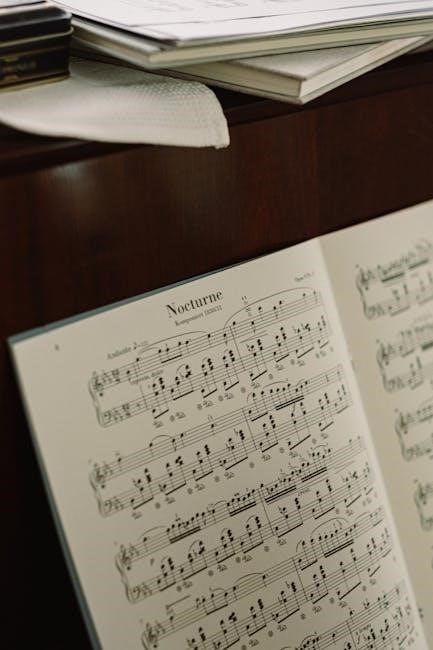
Numerous resources exist to hone your sight-reading skills. PDFs like “Sight reading exercises op.45 (1).pdf” and “Level4Complete.pdf” offer targeted practice‚ building fluency and confidence.
Free Online Sight Reading Resources
While dedicated software often comes with a price tag‚ a surprising number of free online resources can significantly boost your piano sight-reading abilities. Many websites offer interactive exercises‚ allowing you to practice reading notes and rhythms in a gamified environment. These platforms frequently adapt to your skill level‚ presenting increasingly challenging material as you progress.
However‚ supplementing these with downloadable PDF sheet music is crucial. Resources like those found at piano-community.tonebase.co‚ specifically “Sight reading exercises op.45 (1).pdf”‚ provide structured exercises designed to improve your technique. Belmont University’s resource‚ “Level4Complete.pdf” (available at belmont.edu/cmpa)‚ offers further practice material focused on sight-reading and transposition.
Remember to utilize these PDFs strategically. Print them out for a traditional experience‚ or practice reading directly from the screen; Consistent engagement with varied materials is key to developing a strong sight-reading foundation. Don’t underestimate the power of free resources combined with focused practice!
Recommended Sight Reading Books & PDFs
Beyond free online options‚ investing in dedicated sight-reading books and utilizing readily available PDFs can accelerate your progress. Two particularly noteworthy resources are “Sight Reading Exercises Op. 45” and the “Level 4 Complete” material from Belmont University. Both offer a structured approach to developing essential skills.

“Sight Reading Exercises Op. 45”‚ accessible as a PDF via piano-community.tonebase.co‚ presents a progressive series of exercises focusing on clarity and accuracy. The exercises are designed to build fluency in note recognition and rhythmic interpretation.
Conversely‚ “Level 4 Complete” (belmont.edu/cmpa) provides a broader scope‚ incorporating sight-reading alongside transposition exercises. This PDF resource is excellent for pianists aiming to enhance their overall musicianship.
Combining both approaches – the focused drills of Op. 45 and the comprehensive practice of Level 4 – offers a well-rounded strategy. Regularly incorporating these PDFs into your routine will yield significant improvements.
“Sight Reading Exercises Op. 45” ― Analysis & Usage
The “Sight Reading Exercises Op. 45” PDF‚ found on piano-community.tonebase.co‚ is a cornerstone resource for pianists seeking to refine their sight-reading abilities. Its strength lies in its incremental difficulty‚ starting with simple rhythms and gradually introducing more complex patterns and key signatures.
Each exercise is concise‚ forcing the player to maintain focus and react quickly. The collection prioritizes clear notation and avoids overly ornate arrangements‚ ensuring the emphasis remains on fundamental skills.
Effective usage involves consistent‚ short practice sessions. Don’t attempt to play through an entire exercise perfectly on the first try; instead‚ focus on maintaining a steady tempo and accurately recognizing notes.
Treat each exercise as a performance‚ even if it’s imperfect. Repeatedly working through sections that pose challenges will build confidence and solidify your understanding. This PDF is best used as a daily warm-up or a targeted practice tool.
“Level 4 Complete” ― Belmont University Resource Overview
The “Level 4 Complete” PDF‚ accessible through Belmont University’s website (belmont.edu/cmpa)‚ presents a focused approach to sight-reading development. Published on April 27‚ 2026‚ this resource emphasizes both sight-reading and transposition skills for piano players.
The document features a series of short musical examples‚ utilizing a clear and uncluttered layout. It begins with simple melodic lines and progressively introduces more complex rhythmic and harmonic elements. A notable feature is the inclusion of exercises designed to train the eye to quickly recognize intervals and chord structures.

The initial examples showcase a repetitive melodic pattern – “œ œ œ œœ œ œ œœ œ œ œœ œ œ œœ œ œ œœ œ œ œœ œ ˙œ œ ˙” – designed to build fluency.
This resource is ideal for students seeking a structured and progressive pathway to improve their sight-reading proficiency‚ combining technical skill with musical understanding.
Sight Reading Apps and Software
While dedicated PDFs like “Sight reading exercises op.45 (1).pdf” and “Level4Complete.pdf” offer structured practice‚ numerous apps and software solutions complement traditional methods. These digital tools provide interactive experiences‚ often adapting to the user’s skill level and offering immediate feedback.
Many apps present musical excerpts in a similar format to sheet music‚ requiring the pianist to play along in real-time. Features often include adjustable tempo‚ customizable key signatures‚ and the ability to focus on specific rhythmic or melodic challenges.
Software options can integrate with MIDI keyboards‚ providing accurate performance analysis. Some platforms gamify the learning process‚ awarding points and badges for successful sight-reading attempts.
These digital resources are particularly useful for maintaining consistent practice and tracking progress. They offer a convenient alternative or supplement to traditional PDF-based exercises‚ enhancing the overall learning experience.
Developing a Sight Reading Practice Routine
Consistent practice with resources like “Sight reading exercises op.45 (1).pdf” and “Level4Complete.pdf” is key. Establish a routine incorporating short‚ focused sessions for optimal progress.
Setting Realistic Goals
Establishing achievable goals is paramount when developing a sight-reading practice routine. Don’t aim for perfection immediately; instead‚ focus on incremental improvements. Begin by selecting pieces slightly below your current playing level‚ utilizing resources like the exercises found in “Sight reading exercises op.45 (1).pdf” to build confidence.
A realistic starting point might be to accurately play through a short excerpt – perhaps 8-16 bars – at a slow tempo. Prioritize accuracy over speed. The “Level4Complete.pdf” resource offers graded material‚ allowing you to progressively challenge yourself. Track your progress; note the number of errors made and the tempo at which you can play comfortably.
Set weekly goals‚ such as increasing the length of the excerpt or improving rhythmic accuracy. Celebrate small victories to maintain motivation. Remember‚ consistent‚ focused practice with appropriate materials is more effective than sporadic‚ ambitious attempts. Avoid frustration by acknowledging that sight-reading is a skill that develops over time.
Warm-up Exercises for Sight Reading
Before diving into full pieces‚ prepare your mind and fingers with targeted warm-up exercises. Begin with simple rhythmic exercises‚ clapping or tapping patterns to solidify your internal pulse. Utilize the foundational exercises available in resources like “Sight reading exercises op.45 (1).pdf” to reinforce note recognition and rhythmic stability.
Next‚ practice reading scales and arpeggios in various keys. This builds fluency in recognizing intervals and key signatures. The “Level4Complete.pdf” resource can provide examples for different key signatures. Focus on maintaining a steady tempo and accurate fingerings.
Short‚ melodic fragments‚ extracted from sight-reading materials‚ are also beneficial. Read these slowly‚ focusing on identifying intervals and chord changes. Prioritize accuracy over speed during warm-ups. A well-prepared mind and body will significantly enhance your sight-reading performance‚ allowing you to approach new pieces with confidence.
Daily Practice Strategies
Consistent‚ focused practice is key to improving sight-reading skills. Dedicate a specific time each day‚ even if it’s just 15-20 minutes‚ to dedicated sight-reading. Utilize materials like “Sight reading exercises op.45 (1).pdf” for structured practice‚ gradually increasing the difficulty level.
Begin each session by selecting a piece slightly below your current skill level. This builds confidence and reinforces existing knowledge. Then‚ tackle a piece at your current level‚ followed by one that presents a slight challenge. “Level4Complete.pdf” offers a range of exercises for varied skill levels.
Record your progress and identify areas needing improvement. Don’t stop to correct mistakes; keep going to maintain flow. Review challenging sections later. Remember‚ the goal is fluency‚ not perfection‚ during the initial read-through. Regular engagement with sight-reading materials will yield significant improvements over time.
Short‚ Frequent Sessions vs. Long‚ Infrequent Sessions
When building sight-reading proficiency‚ the frequency of practice often outweighs the duration. Short‚ daily sessions – 15-20 minutes – are demonstrably more effective than infrequent‚ lengthy practices. This approach reinforces neural pathways more consistently‚ leading to faster skill acquisition.
Utilizing resources like “Sight reading exercises op.45 (1).pdf” in these shorter bursts allows for focused attention without mental fatigue. Long sessions can lead to diminished returns as concentration wanes. Consistent exposure to new material‚ even in small doses‚ is crucial.
“Level4Complete.pdf” provides ample material for these focused sessions. Breaking down practice into manageable segments prevents overwhelm and promotes a more positive learning experience. Prioritize regularity over marathon sessions for optimal sight-reading development. Remember‚ consistent effort yields lasting results.
Focusing on Different Aspects (Rhythm‚ Notes‚ Dynamics)
Effective sight-reading practice isn’t solely about playing the correct notes; it’s a multifaceted skill. Dedicate specific sessions to isolating and improving individual components. One day‚ prioritize rhythmic accuracy using exercises from resources like “Sight reading exercises op.45 (1).pdf”‚ clapping or tapping the rhythms before playing.
Another session could focus purely on note recognition‚ ignoring rhythm initially. “Level4Complete.pdf” offers varied notation for this purpose. Subsequently‚ concentrate on dynamics and articulation‚ adding expression to previously mastered passages.
This segmented approach prevents cognitive overload. By tackling rhythm‚ notes‚ and dynamics separately‚ you build a stronger foundation. Avoid attempting to master everything simultaneously. Targeted practice‚ utilizing available PDFs‚ accelerates progress and fosters a more nuanced understanding of the music.

Advanced Sight Reading Techniques
Elevate your skills by scanning scores before playing‚ identifying tricky sections‚ and utilizing mental practice. PDFs like “Sight reading exercises op.45 (1).pdf” aid in developing these crucial techniques.
Scanning the Score Before Playing
Before even touching the keys‚ a crucial advanced technique is thoroughly scanning the entire score. This initial overview isn’t about playing; it’s about gathering information. Look for key signatures‚ time signatures‚ and any accidentals.
Identify recurring rhythmic patterns – are there dotted rhythms‚ syncopation‚ or consistent groupings? Notice the melodic contour: does it ascend‚ descend‚ or remain relatively static?
Briefly analyze the harmonic structure. Are there large leaps or smooth voice leading?
Resources like the exercises found in “Sight reading exercises op.45 (1).pdf” are designed to train this skill. The Belmont University resource‚ “Level4Complete.pdf”‚ also implicitly encourages this pre-performance analysis.
This preliminary scan primes your brain‚ reducing surprises and allowing for a more fluid and accurate performance. It transforms sight-reading from a reactive process to a proactive one‚ significantly improving your overall efficiency and musicality.
Identifying Difficult Passages
Following the initial scan‚ pinpoint sections that present potential challenges. These might include rapid key changes‚ complex rhythms‚ large intervals‚ or unfamiliar chord voicings. Don’t shy away from these; acknowledge them proactively.
Look for patterns within the difficulty. Is it a recurring rhythmic figure that needs careful attention‚ or a specific hand position that feels awkward?
The exercises in “Sight reading exercises op.45 (1).pdf” often isolate challenging technical elements‚ providing focused practice. Similarly‚ “Level4Complete.pdf” presents varied musical scenarios‚ forcing you to identify and address difficulties on the fly.
Mentally rehearse these passages – visualize your fingers moving across the keys. Break down complex rhythms into smaller‚ manageable units.
Acknowledging these hurdles before playing allows you to approach them with intention‚ rather than reacting in panic. This targeted preparation is key to successful sight-reading.
Mental Practice and Visualization
Before physically touching the keys‚ dedicate time to mental rehearsal. Visualize the score – see the notes‚ the key signature‚ the time signature‚ and the overall shape of the music. Imagine your hands moving across the keyboard‚ executing the passage smoothly and accurately.
Utilize resources like “Sight reading exercises op.45 (1).pdf” to mentally ‘play’ through exercises‚ focusing on fingerings and rhythmic accuracy. “Level4Complete.pdf” offers diverse pieces perfect for this type of preparation.
This isn’t simply about imagining success; it’s about actively engaging your brain’s motor cortex.
Visualize potential problem areas identified during your initial scan.
Mental practice strengthens neural pathways‚ making the physical execution easier and more fluid. It’s a powerful tool for improving sight-reading speed and accuracy‚ even without a piano readily available. Consistent mental practice complements physical practice beautifully.
Dealing with Unexpected Challenges
Even with diligent preparation using resources like “Sight reading exercises op.45 (1).pdf” and “Level4Complete.pdf”‚ unexpected musical hurdles will inevitably arise during sight-reading. The key is to maintain composure and employ strategic problem-solving techniques.

Don’t stop! Keep the pulse steady‚ even if you have to simplify rhythms or skip notes temporarily. Prioritize maintaining the overall flow and harmonic structure. A consistent tempo is crucial.
If you encounter a particularly difficult passage‚ quickly assess if it’s rhythmically or harmonically complex.
Focus on the larger musical context.
Don’t dwell on mistakes; acknowledge them and move forward.
Remember‚ sight-reading isn’t about perfection; it’s about accurately representing the music at first glance. Embrace the challenge and view each difficulty as a learning opportunity. Consistent practice with varied materials builds resilience.
Common Mistakes and How to Avoid Them
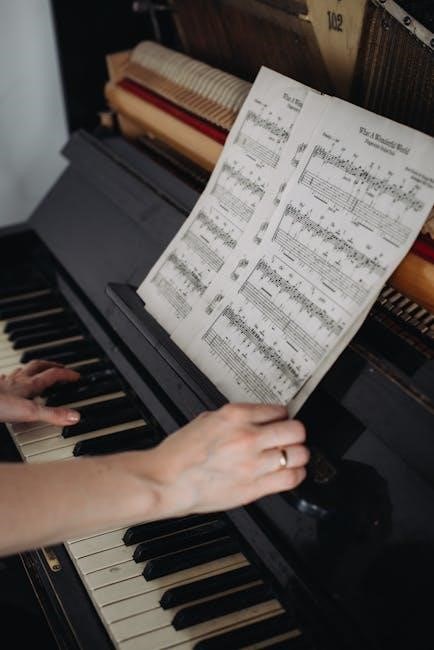
Many pianists encounter similar pitfalls when developing their sight-reading skills. Utilizing resources like “Sight reading exercises op.45 (1).pdf” and “Level4Complete.pdf” can help address these issues proactively.

A frequent mistake is focusing solely on individual notes‚ neglecting rhythm. Prioritize rhythmic accuracy first‚ even if it means simplifying the notes initially. Another common error is stopping when encountering a difficult passage; maintain a steady pulse‚ even if you need to simplify.
Failing to scan the score before playing is detrimental. Quickly identify key signatures‚ time signatures‚ and potential challenges. Avoid looking at your hands excessively; train your eyes to read ahead.

Ignoring dynamics and articulation markings diminishes musical expression. Pay attention to these details from the start. Consistent‚ focused practice‚ utilizing varied materials‚ is the most effective way to overcome these common mistakes;